
Was Rockies Express a Mistake? Part I

By Belinda Petty, Enerdynamics Instructor

In the early part of 2000, Rockies producers were growing extremely frustrated. Since the 1980s, producers had dreamed of higher prices for their gas. Whenever regional gas-on-gas competition eroded prices too significantly, interstate projects would pop up to relieve the netback price erosion. But the Rockies projects were never large enough or long enough to move salient ongoing production to market.

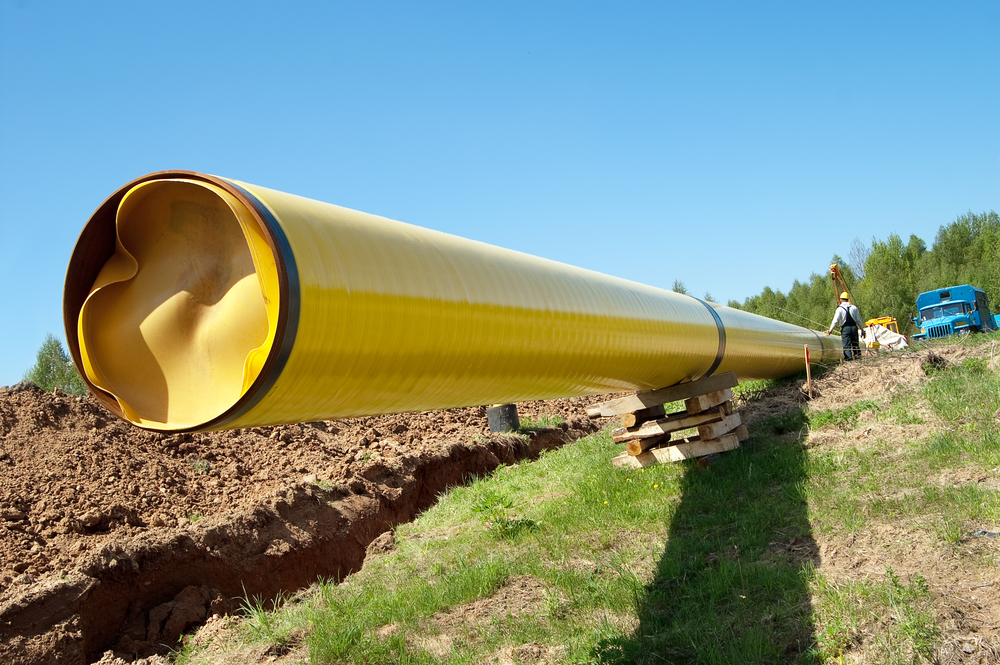
During high-demand times, with the start-up of each new pipeline, netback prices approached parity with Gulf Coast or Mid-Continent supply netbacks. However, the price erosion, exacerbated by continued drilling, grew steadily worse. At times, Rockies producers were forced to accept prices $2-3 on average less than their Gulf Coast counterparts. A new high-risk/high-reward project began evolving, one that would alleviate the majority of Rockies’ gas-on-gas competition by moving huge volumes of pent-up supply. This project also would move the gas toward the highest-priced market in the U.S. The pipeline went from concept to project in 2004. Rockies Express (REX) became the talk of the industry. The vetting process began on this estimated $3 billion, 42-inch in diameter, 1,700-mile, first new long-distance pipeline in decades.

In the beginning, the project looked incredible. The ability to move almost 2Bcf/day of supply out of the Rockies to the higher-priced East Coast market was extremely appealing. The size of the project, the forecast timing of project completion, the targeted markets, and even the cost (which avoided significant rate stacking) all seemed highly desirable and well-supported. Rockies producers needed to move and sell gas. The prospect of higher netback encouraged them to continue drilling.

The eastern market was constantly short of gas in the winter. In addition, new gas demand for electricity generation was on the rise. Gulf Coast and Canadian supplies were expected to continue their decline. However, it took longer than expected to obtain shipper agreements and FERC approval.

As Rockies producers learned, concept and reality can be very different in an ever-changing marketplace. Fast forward five years: REX was fully operational by November 2009. The total project was completed 6+ months later than expected, with cost overruns in the 100% range (final cost around $6.8B), and with terminus delivery into a region now experiencing explosive supply growth from Marcellus shale production. So, was REX a costly mistake?

In my next blog post (“Was Rockies Express a Mistake, Part II”), I’ll examine REX’s ramifications in more detail including where the pipeline stands in today’s natural gas market.

Posted in Natural Gas | Tagged , , | 1 Comment

Smart Meters: Helping Customers Understand What’s In It for Them

Smart Meter, EVB Energy Ltd

Smart Meter, Image via Wikipedia

By Dan Bihn, Enerdynamics Instructor

In case you’ve missed the news, not everyone wants a smart meter. According to StopSmartMeters.org (I’m not making this up), no less than 8 counties and 28 cities and towns in California now have a moratorium on smart meter installation. Now the California Public Utilities Commission is directing utilities to create a way for customers to opt-out.

Why? It seems that no one bothered to ask consumers if they wanted a smart meter – and no one bothered to explain why a smart meter could help them and their community.

When utility folks talk about smart meters, they often seem to be talking to themselves, not their customers: “Smart meters will give us better insight to customers’ use-patterns so we can plan better.” Or, “Smart meters will give us more control of the load during critical peak times.” Or, “Smart meters will help us manage the load to reduce our costs.”

But the consumer may be interpreting this as “You’re going to invade my privacy and control my appliances – so you can save money. Thanks, but no thanks.” (Ok, I’m exaggerating – they usually don’t say thanks.)

What if the conversation began with things the consumer cared about?

How about, “We would like to give you a smart meter and we think you’ll want one.” Of course you can opt-out, but before you do, consider these important and exciting things for now and the future: 

  • With a smart meter, you won’t have to worry about a meter reader stomping on your flowers any more.
  • With a smart meter, we can keep your rates lower than they would be with old-style meters.
  • With a smart meter, your soon-to-be smart appliances will be able to use electricity when it is cheaper, saving you money.
  • With the smart meter, you’ll be able to charge your electric car off-peak for half the price. (And while you’re at it, why not mention that a gallon of gasoline equivalent of electricity costs around a dollar even without a smart meter). 
  • With a smart meter, you can sell your roof-top solar (PV) electricity on peak for twice as much as you do now. 
  • And if you want more solar energy on the grid (and recent PEW data says that 77% of us do) smart meters enable a smart grid that can make it much cheaper for all of us to deal with those pesky clouds. 

Of course most people don’t have an electric car, PV on their roofs, or smart appliances, but many people can imagine having them – and think that making them cheaper and easier is pretty cool.

This is exactly how forward-looking utilities will be talking to their customers. Stay tuned for more details when they become public.

Posted in Electricity | Tagged , , , , , | 1 Comment

Natural Gas: Overcoming the Ugly Duckling Syndrome, Part II

The McMahon natural gas processing plant in Ta...

Image via Wikipedia

By Belinda Petty, Enerdynamics Instructor

In my last blog I discussed the need for the evolving natural gas industry to educate the public and key stakeholders.  In this article, I’ll discuss more in depth on how this might occur.

First, we need to clearly and proactively communicate to our various audiences the benefits that natural gas brings to the world of energy.  In the past, our public relations groups have been called upon only in response to a problem.  This needs to change. The market needs to be saturated with proactive, educational messages in all forms.

Second, we as industry insiders need to communicate with and educate each other.  I know it’s a competitive marketplace, but sharing best practices helps us all.  Each company will have its own way of implementing ideas.  It’s important and profitable for everyone in a company, from mailroom to boardroom, to understand the basics of the industry along with its benefits.  Associations can help in this process by bringing groups together.

Third, we need to communicate with and educate regulators and stakeholders – local, state, and federal.  Why wait until a lawsuit “issue” is raised to tell the public the composition of fracking fluid?  Hiding behind the statement “it’s a proprietary trade secret” gets us all behind the public opinion curve.   Where is the risk analysis?  Is it more costly to announce the reasoning for various fluid components before the drill bit touches soil or to hide behind the trade-secret excuse until someone files a lawsuit and poisons the press?  To the public “hiding” is translated as wrong-doing – and that’s not the image our industry needs as an energy frontrunner.

It’s certainly a new world for natural gas.  Our industry is not accustomed to being in front of the camera.  We will make some mistakes in learning this new role of leader, but we can’t wait any longer to start taking steps.  The time has come to embrace our true role as swan and lead the world to a warmer and cleaner reality.

Posted in Natural Gas | Tagged , , , | Leave a comment

Natural Gas: Overcoming the Ugly Duckling Syndrome, Part I

By Belinda Petty, Enerdynamics Instructor

For many decades, natural gas was perceived as a nuisance, an after-thought, a stepchild to oil and other energy sources.  From its discovery in the late 1800s, oil producers and coal miners simply wanted rid of this dangerous cousin as they drilled for black gold or mined for coal.   In the 1930s, natural gas found a low-value market niche.  As late as the 1990s, natural gas was still an industry flying under the general public’s radar.  The natural gas industry made a little money and did what it wanted – with regulatory oversight, of course, and with very little general public scrutiny. 

Much has been learned as we in the natural gas industry have fought to gain traction in the world of energy. We’ve learned about the impact of changing the rules to encourage competition.  We’ve learned to read market signals.  We’ve learned the value of innovation.   We’ve learned to identify, embrace, or hand off risk.  Yet, after all we’ve learned, we’ve still felt like the ugly duckling. Until now.

Almost overnight our world has changed.  Natural gas is now seen worldwide as the preferred fuel within the hydrocarbon complex, a “bridge fuel” into the future, a swan.   Natural gas is favored over coal and any other product from the crude complex.  Due to environmental regulations, the demand for natural gas is increasing faster than ever.  In fact, natural gas is on pace to become the top primary energy source over the next decade.

Such growth has thrust gas into the public spotlight.  How can we in the natural gas industry embrace the transformation instead of duck and cover?  It’s time to drop the awkward market stance.  It’s time to spread our powerful wings and fly.

I applaud the API (American Petroleum Institute) commercials that educate the general public about jobs created and other economic and environmental benefits from natural gas. But where are the natural gas associations?  How ironic that an oil organization is singing the praises of natural gas.

To proactively manage this new role in the public spotlight, the natural gas industry — both its associations and individual companies — must educate.  In our next blog post we will explore key aspects of how our industry might go about this.

Posted in Natural Gas | 1 Comment

Electric Storage Revolution Coming Soon?

by Bob Shively, Enerdynamics President

For the last century, electric grids have been designed and operated with the paradigm that electricity cannot economically be stored except in very limited cases. However, new storage technologies are developing rapidly and those currently being demonstrated on the grid appear likely to change the “no-storage” paradigm sooner than later.

Recent research has focused on a number of alternate storage technologies including various types of electrochemical storage (commonly known as batteries), and non-electrochemical technologies such as thermal energy storage, flywheels, Compressed Air Energy Storage (CAES), very large capacitors, and Superconducting Magnetic Energy Storage (SMES). Following is a brief overview of how each technology works:

  • Batteries create electrical flow through chemical reactions. Batteries useful for the electric grid can be recharged by applying electrical flow that reverses the reaction that provides electricity. Batteries for grid use can be created from various chemical combinations including lead acid, nickel-cadmium (NiCad), lithium-ion (Li-ion), sodium/sulfur (Na/S), zinc/bromine (Zn/Br), vanadium-redox, and nickel-metal hydride (Ni-MH). In addition to stand-alone battery installations, they may be integrated in the grid by connecting electric vehicles.
  • Thermal energy storage is normally done at a customer location with a large cooling requirement. Cold water or ice is created using electric compressors during off-peak hours and is stored for cooling uses during peak hours.
  • Flywheels consist of a low-friction spinning cylinder attached to a shaft connected to a motor/generator. When electricity is stored, the motor converts electricity to kinetic energy stored in the spinning cylinder. When electricity is desired, the motion of the cylinder is used to turn the generator thus re-converting the kinetic energy to electricity.
  • CAES uses electricity to compress air in large underground cavities at high pressure. When electricity is desired, the compressed air is used to spin a combustion turbine that in turn spins a generator.
  • Capacitors store electricity as an electrostatic charge. Smaller capacitors have long been used as a means of supporting power quality on grids, but new much larger capacitors offer the opportunity to store larger amounts of power.
  • SMES consists of a coil of superconducting material that, when cooled below a critical temperature, allows power to circle through the coils with virtually no resistance. When electricity is desired, the power coils are reconnected allowing the power to flow onto the grid.

One advantage to the variety of technologies is that different technologies have different operational characteristics and thus provide a variety of potential benefits.

So what is holding back storage implementation on the grid? One constraint is the need for demonstration of operational and economic characteristics. Numerous demonstration projects are currently taking place to gain further knowledge in these areas. The second is the need to change market rules and operational practices to provide opportunities for owners of storage to monetize the benefits in a profitable manner.

Read more on this topic in Enerdynamics’ Energy Insider.

Posted in Electricity | 1 Comment

High-penetration Renewables: Far-fetched or Feasible?

The main research windmills at NREL

Image via Wikipedia

by Bob Shively, Enerdynamics President

The U.S. has in recent years experienced significant growth in renewable generation. Multiple states are now implementing electric resource plans that incorporate high levels of renewable generation. These include Hawaii at 40%, California at 33%, Colorado and Maine at 30%, as well as numerous other states at 20% or higher.

Such growth is not without apprehension. There is concern that many of these percentages have been set through a political process rather than through traditional engineering-based resource planning. Modern power systems were designed for steady generation provided by a limited number of centralized, dispatchable power plants. A high penetration of renewables, provided largely by wind and solar power, presents a new paradigm – a significant amount of generation that is variable due to the intermittency of wind and sunlight. Such generation is non-dispatchable since wind and sunlight can’t be controlled, and difficult to predict since output depends on weather conditions. For the planners and operators who must ensure reliability, such variability is cause for concern. Key areas affected include long-term capacity planning, seasonal reliability planning, day-ahead and hour-ahead scheduling, and real-time operations.

From the system operator’s perspective, some renewables such as geothermal and biomass operate similarly to a fossil fuel unit in that units are dispatchable. This means that output can be controlled by adjusting the input of fuel, since the availability of fuel is not variable. Conversely, wind and solar technologies are generally non-dispatchable, variable, and their unit output can be difficult to predict accurately.

wind speed and solar radiation hourly variabilities

Examples of wind speed and solar radiation hourly variabilities

Despite such challenges, studies by various organizations including the North American Electric Reliability Corp (NERC), the National Renewable Energy Laboratory (NREL), and different Independent System Operators indicate that with changes to procedures and technology, high levels of penetration are feasible.

Can such penetration be achieved at a reasonable cost? Most studies say yes. A recent U.S. Department of Energy study of 20% wind penetration indicated that integration costs are expected to be less than 10% of the wholesale cost of energy, with various cited studies showing integration costs ranging from $1.85 to $4.97/MWh. While many would find this an acceptable cost, we won’t really know what the costs are until we get well into the process. But it appears likely that within the decade operators will handle generation variability as a routine occurrence, much like they do loads today.

Note: The above is a condensed version of an article that appeared in Enerdynamics’ Energy Insider Issue Q1 2011. Click here to read the full article.

Posted in Renewables | Leave a comment

U.S. Becoming Natural Gas Exporter?

by Bob Shively, Enerdynamics President

Just three years ago, the overwhelming consensus was that U.S. and Canadian natural gas supplies were dwindling and growing demand would overwhelm supply, thus resulting in long-term high prices. Developers seeking to take advantage of the next big infrastructure boom rushed to get LNG import terminals in place in the U.S., Canada and northern Mexico.

Fast forward to 2011. The shale gas boom coupled with falling industrial demand during the great recession has turned the North American gas marketplace on its head. By the end of 2009, U.S. gas reserves had increased by 19% in two years. The December 2010 month-ahead Henry Hub price of $4.27/MMBtu was 67% lower than its 2008 summer peak of $13.11/MMBtu.

Compared to other global markets, natural gas in the U.S. is cheap – December 2010 LNG spot prices in Europe were about $9/MMBtu, and in Asia were more than $11/MMBtu. Suddenly gas producers in the U.S. see a new opportunity: Why not take some of the excess availability in the U.S. and export it to these higher priced markets?

All data are annual averages reported in BP Statistical Review of World Energy 2010 except for 2010 data, which represents spot prices as of Dec. 13th.

Since 1969, the U.S. has exported small volumes of LNG to Japan (from the Alaskan Kenai facility) and volumes by pipeline to Mexico. Might the U.S. begin exporting more significant volumes to world markets? Current market activities suggest the answer is yes. A number of market players are moving forward with preliminary actions to develop such capabilities.

The Department of Energy has granted permits to multiple existing LNG terminals looking to re-export LNG volumes sitting in their storage tanks, and, in the past year, cargos have been re-exported from the U.S. to Europe and Asia. And a number of countries in the Caribbean and South America are interested in replacing more costly oil-fired electric generation with gas-fired generation fueled by LNG imports.

So what does this all mean? Not much in the immediate future as export infrastructure will take a number of years to develop. But, by 2015 or 2016 we could see North American natural gas supplies begin to compete in world markets. This might once again shift our paradigm of how natural gas is priced and how large the potential market is for North American production.

Note: The above is a condensed version of an article that appeared in Enerdynamics’ Energy Insider Issue Q1 2011. Click here to read the full article.

Posted in Natural Gas | Leave a comment

Another Smart Grid Application: Harnessing the Benefits of a Microgrid

By Bob Shively, Enerdynamics President

So far we have discussed Smart Grid applications that improve the way energy companies currently deliver services as well as applications that may offer consumers the opportunity to become directly involved in dynamic electric markets.  A third Smart Grid application – and perhaps the least discussed and least understood opportunity – is the possibility of creating microgrids by using communications, monitoring and control technologies. Microgrids are small localized grids that can run in isolation but can also be interconnected into the wider grid.

Microgrid

A local microgrid in Sendai, Japan

Why would anyone want to build a microgrid when they can simply be part of the traditional utility distribution system?  One reason is the potential for higher reliability – microgrids can be built to deliver the level of reliability required by customers on the microgrid rather than the level of reliability applicable to generic utility customers.  A second reason is that micogrids may provide economic benefits by allowing multiple facilities to interact with utilities and wholesale markets as an aggregated entity and to self-provide energy when economical.  In this case, opportunities unavailable or uneconomical for smaller customers may become available when loads and distributed generation are aggregated.

Let’s look at an example: the U.C. San Diego (UCSD) microgrid project in California.  The 450-building, 1,200-acre campus is connected to the San Diego Gas and Electric utility grid at a single 69 kv substation.  The microgrid begins on the university side of the substation and includes all distribution facilities, two 13.5 MW gas turbines and a 3 MW steam turbine unit, cogeneration systems that use the waste heat from the three turbines to drive compressors for building cooling, a 1.2 MW photovoltaic solar installation, thermal energy storage, a centralized energy management system connected to the 60 largest buildings, and extensive metering and monitoring of loads.

Planned additions include a 2.8 MW fuel cell that will burn waste methane collected from the waste-water treatment plant; electricity storage; a master control system that will control and monitor all generation, loads, and storage; plus a software system that will utilize dynamic energy price signals, weather conditions,  and other key factors to calculate optimal utilization of the system.   

The microgrid supplies about 80% of the campus’s annual power needs at a cost lower than the utility or retail market price.  And with aggregation, the campus can purchase additional power required at a low wholesale price. With the microgrid, UCSD plans to get the best of all worlds: When they can supply their own power most cheaply they will do so; if market prices are better they can buy from the market via the SDG&E system; and if they have excess power cheaper than market value they can sell it back into the grid and obtain some extra revenue. For a more detailed description of this project see http://www.edsa.com/pa_articles/pdf/ucsd_smart_grid.pdf.

Posted in Electricity | Leave a comment

Why Does Cold Create Electric Outages in Texas?

Ice stormBy Greg Stark, Enerdynamics Instructor

The recent cold snap that put central Texas in a deep freeze generated some buzz among those in the electric industry as the Electric Reliability Council of Texas (ERCOT) declared a System III emergency followed by rolling blackouts.  I surmise we have a generation reliability problem in ERCOT when the weather gets cold. Following is a brief summary of what happened and what I believe to be the cause.

First, here’s a little perspective on the ERCOT system: Last summer’s peak was about 65,000 MW.  The morning of Feb. 2, 2011, during the morning peak (6-9 a.m.), it was 52,000 MW. ERCOT did its day-ahead forecast on Feb. 1 and put in place the normal plan to schedule supply and demand as well as ancillary reserves including spinning reserve, non-spinning reserve and replacement reserve.

The morning of Feb. 2, when the customer load started coming on the system, ERCOT experienced about 7,000 MW of generation tripping off line at one time or another when it should have been operating.  Because it is maintenance season, many baseload units plus some peaking turbines were already off-line for scheduled maintenance.   When multiple generating units tripped that morning, ERCOT called on both the spinning reserves and the interruptible customers.  Spinning reserve ramped up to take the place of tripped units and the interruptible customers reduced the load to get ERCOT back into a better position regarding supply, demand and reserves.   

At that point ERCOT had to “make a call”  for more  reserves because it had decimated its spinning reserve pool even after promoting lots of non-spinning reserve up to spinning and trying to get the replacement reserve folks to come up as fast as they reasonably could. ERCOT couldn’t meet its NERC requirements for the various reserve categories because many of the normal flexible assets were already on the system replacing the baseload plants down for scheduled maintenance. Thus, ERCOT declared a System III emergency, which allowed it to institute rolling blackouts.  

Bringing the load down with rolling blackouts across the state freed up some capacity in the generating units that were on line and operating. This replenished the spinning reserve pool and got ERCOT back within the NERC real-time reserve requirements. Had ERCOT elected to not reduce the demand side of the equation as it did, it would have been forced to operate with  lower than required reserves and closer to the edge of a potential full cascading blackout.

So that’s a summary of what happened … but the real question is why?

My initial guess, which was later supported by news accounts, for such a large number of units tripping is freezing/icing of the cooling water system that is part of the typical steam-generating system that coal, gas and nuclear plants use.  We experienced a severe problem with freezing/icing in many of the baseload plants back in December 1989 when central Texas temperatures dipped down to around 10 degrees.  This was the last time ERCOT went to a complete Stage III (system-wide rolling blackouts). At that time, most of those big baseload coal and steam plants did not have actual structures protecting their turbines and generators

After the 1989 incident, many of those exposed generating units were covered with a structure. However, much of the cooling water piping and system components are still exposed to the elements outside the structure, and thus the icing of these systems clearly is still a problem when extreme cold hits central Texas.  The bottom line on Feb. 2: Too much tripped offline too fast and there wasn’t the usual supply of fast-starting flexible reserve gas combustion turbines to take the tripped plants’ place.  Those units had already been scheduled to take the place of baseload units off for scheduled maintenance or were themselves unavailable for their own scheduled maintenance.

While such outages cause an obvious inconvenience to customers, there is the argument that we shouldn’t spend too much time or money trying to prevent rolling blackouts that have happened just twice in a 22-year span and during which the system stayed up.  

It seems we simply don’t plan well for cold weather in Texas because it’s a statistical abnormality. And I don’t just mean ERCOT: The morning of the rolling blackouts, there was water running down my street from three separate sprinkler system backflow valves that froze and burst!

Posted in Electricity | Tagged , , , , | 1 Comment

Smart Grid Enables Electric Market Participation by All Customers

A clothes dryer connected to a load control &q...

Image via Wikipedia

by Bob Shively, Enerdynamics President

In continuing our discussion of Smart Grid applications, another key function of the Smart Grid is to use communications, monitoring and control technologies to enable a host of new services. Such services allow customers to more actively participate in electricity markets through use of demand response and distributed generation. 

Historically, demand response primarily has been limited to two types of utility-run programs: The most common are curtailable rate schedules for large commercial and industrial customers whereby rate discounts are given in return for the right to call up and order a customer to interrupt service under emergency conditions. Less common have been programs associated with residential and small commercial customers whereby the utility can remotely switch off hot water heaters or air conditioners in return for a small fixed payment. Distributed generation has been mostly limited to large cogeneration plants at industrial customer sites or to back-up generation that is only used during power outages.  Implementation of the Smart Grid introduces the possibility of significantly expanding market participation among all customer sectors from large industry all the way down to homeowners.  

Several new technologies are either available or in design phase to allow customer participation in hourly and even sub-hourly electric markets. Such participation has historically been limited to large wholesalers.  These technologies include: 

  • roof-top photovoltaic installations
  • controllable appliances and thermostats
  • home gateways easily programmed with consumer preferences that dictate when and how to reduce power usage based on economic signals from the grid
  • electric vehicles that buy power when prices are low and provide power back to the grid when prices are high
  • smart meters that keep track of everything
  • software programs that allow aggregators to build blocks of customer generation and demand response to resemble characteristics of a large centralized generator

The potential exists for individual consumers to make price-based decisions on when and how to use and/or produce power with minimal attention or effort.

So if the technology is available, what’s the missing link?  It simply requires further development of actual markets that make it worthwhile.  We’ve seen such beginnings in some of the ISO markets, especially New York, New England, and PJM, where aggregated loads have participated in markets including capacity, energy and ancillary services.  

In time, as technologies and markets further develop, we are likely to see new Smart Grid-enabled services leading to a radically different industry.

Posted in Electricity | Tagged , , | 1 Comment